Monday, April 18, 2011

These are Some of My Recent Black and White Images

Recently, I have been shooting images of things I find in nature. Although a rock, a root or log is not an amazing or fabulous item, a talented photographer can use creative lighting, composition and exposure techniques to produce a pleasing image.
What I like about this rock is the way the early morning light strikes at an angle creating a light side and a dark side. There is a lot of texture, too.

The photo of the wrinkly root sort of reminds me of an old person's hand. This is a bit of detail attached to the base of a large old Maple tree.


Thursday, April 14, 2011

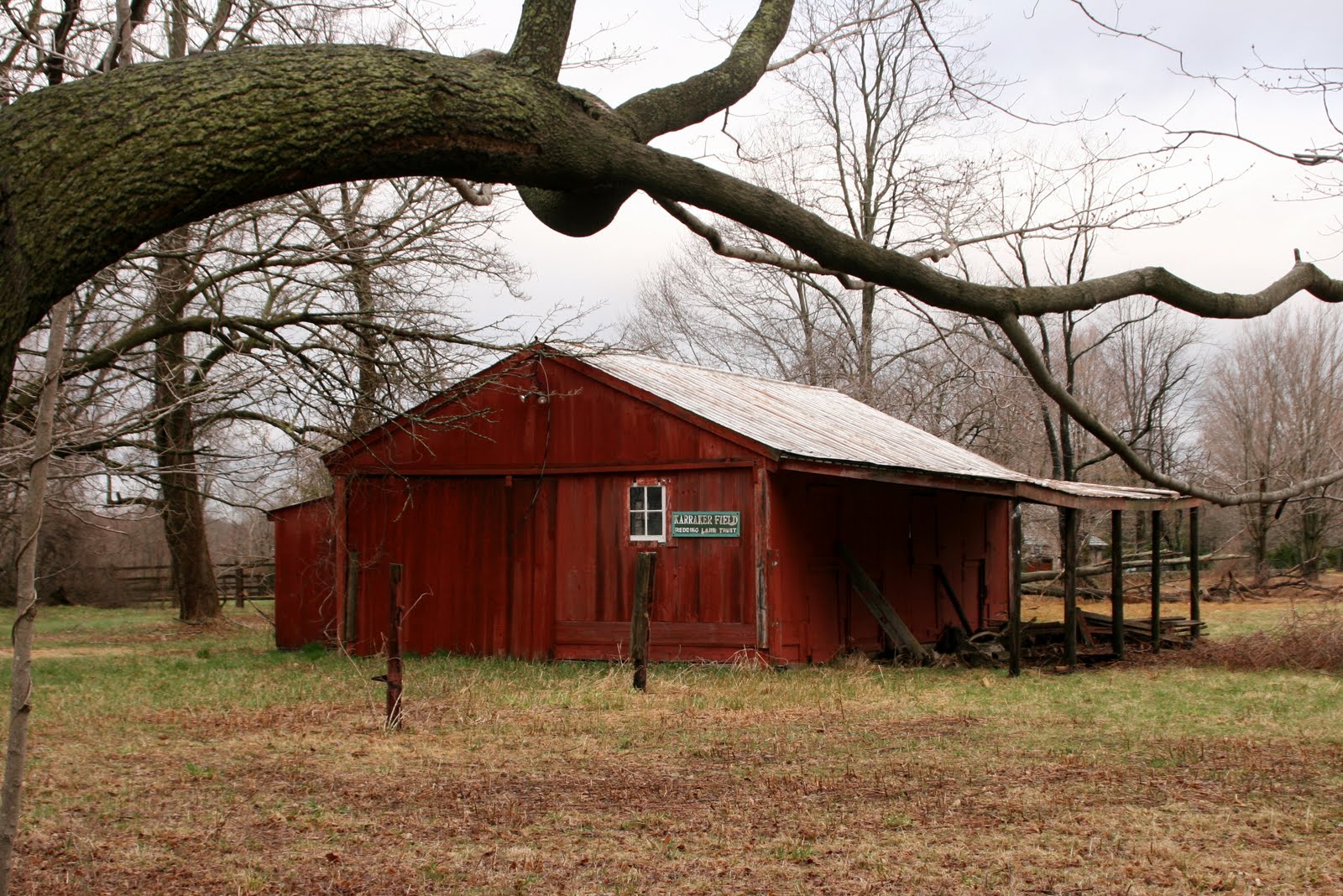
An Old Shed Near Redding Connecticut


This morning I was on my way to work and running a few minutes early so I jumped out of my car and shot a few frames of this rustic old building. I like how this long branch helps frame the image. Connecticut has some scenic areas.

Thursday, March 3, 2011

Adventure in the North with Death Valley Danny

copyright Jon Wason 2011 
While prospecting for Gold up in the Yukon Territory with a man named Death Valley Danny it got so cold that we almost froze to death. But my trusty sled dog named Woofer contributed to my survival. Danny was not used to this Northern climate since he was from the high desert in California. He only came north to get a change of scenery for a while and to collect a gambling debt. I met Danny about a year ago when I was passing through Death Valley on my way from Texas to Hollywood. I was on my way to audition for a part in the talking movie called the Zigfield Follies of 1939 when my Stutz Bearcat automobile broke down near Scotty’s Castle. I caught a ride with a truck driver hauling a load of Crosley radios. While waiting for the car to be repaired I was biding my time in the lobby of the Oasis Hotel. I joined a poker game with a man in a yellow zoot suit, two cowboys and an old man wearing a bathrobe. One of the cowboys was abruptly asked to leave the table. Cheater, I guess.


His seat was taken by a talented card player that the other men called, Steamboat Steve. A tall man, dressed in a fancy light blue suit that made me think that perhaps he was a riverboat gambler. Still I wondered how a Mississippi River gambler could have ended up out here in the desert. I didn’t ask and he didn’t say. The card game was going well until about midnight when I ran out of cash, gold nuggets and jewelry. In desperation I wagered the deed to my mine in the Yukon Territory up near Yellowknife. That night I picked up the nickname Lenny-No-Penny and it stuck. As the hours at the green felt table passed I learned the name of man in the yellow plaid zoot suit was Death Valley Danny. He was a local. His handful of one-eyed Jacks and tens entitled him to ownership of the Lucky Leonard Mine. My loss was his gain. So here we are shivering in the Yukon. About the time that Death Valley Danny arrived in the Yukon we hit a nice vein of good quality ore so the future looked bright. His card playing habit had resulted in my winning back half ownership of the mine. We were both going to become rich. But after two successful days of digging out some good color, an intense blizzard blew in on a wicked North wind. We were about 200 feet down in the mine readying some dynamite and hadn’t noticed that the weather outside had changed for the worse. When Danny took a break from swinging his pick axe to go up and fetch a canteen of water, he saw that the bad weather had arrived and he panicked. That lowdown Danny took my dogsled, rifle, ax and a 100 pound sack of beans as he made a dash for town. Fortunately he left my dog, Woofer, behind. Alone in the mine with just my trusty sled dog to keep me company, I devised a survival plan. With no firearms, food or water I had no choice but eat the dog. Luckily I had stashed away a reserve supply of Barbeque sauce from my pal in Kansas City. He owns a smoke shack near the state line and makes the best barbeque ever. Those Kansas City rib joint can’t be beat. One time I was at a little smokehouse near Swope Park eating a big plate of ribs when none other than Charles Lindberg walked in. Well, I walked up to him and said if he knew what was good for him he would turn around and leave … But that is another tale for another day. Back to the gold mine. Well I knew that I was in trouble but I stayed calm. Down in the mine the temperature is an even 68 degrees all the time so I sat out the blizzard and rationed by food until spring came and I could hike back to town with a satchel full of gold. It was a long trek and when I arrived on the muddy main street of Yellowknife and made my way directly to the Grant’s General Store. “Lenny! Good to see you! I thought you were dead! Come on in,” was the hearty greeting of One-Eye Grant the owner and proprietor. “What made you think I was dead? I am a bit tired, hungry and thirsty but far from cashing in my chips,” I replied. Your partner Death Valley Danny passed through here during a blizzard and mumbled something about an incident at the mine and me and boys took it to mean that you were a goner,” said One-Eye. “That scoundrel left me for dead but I’ll have the last laugh, indeed,” I said as I plopped a fist full off gold nuggets onto the counter. That spring I was living a life of luxury up in the Yukon. I never heard any news of Death Valley Danny so I guess he must have headed back to California.

Tuesday, June 29, 2010

Flash Memory is a Marvel of Modern Science

The tiny memory cards that store hundreds of images for digital cameras may look insignificant at a glance but they are amazing. Their storage capacity, the speed at which they write, and their low cost make them a modern marvel. These little rectangular Compact Flash (CF) cards and SecureDigital (SD) cards are silent, have no moving parts and can withstand exposure to magnets, intense pressure and temperature extremes. Even if you accidently drop one in the toilet, it will not be damaged.


The person credited with inventing flash memory is Dr. Fujio Masuoka. In 1984 while working at Toshiba he made major developments in his work with cells that hold data and can be erased rapidly then rewritten. Flash was suggested as an appropriate name for the new type of memory because the process of erasing data from the cells was like a camera’s flash. History was made in 1984, when he presented this new technology at the meeting of the Institute of Electrical and Electronics Engineers (IEEE) in San Jose, CA.
Intel and other companes saw that flash memory had great potential. In 1988 Dr. Eli Harari and Sanjay Mehrotra, former coworkers at Intel, formed a company to produce flash memory for consumers. They founded SanDisk, which is now a world leader in digital memory devices. Sandisk’s launch in Silican Valley was perfectly positioned to take advantage of the the arrival of digital photography.
Some early digital cameras like the Sony Mavica stored images on a floppy disk. People liked this because it was easy to take the floppy out of the camera and insert it into a computer to transfer the images. The next generation of Mavica recorded images to a CD. But flash cards ultimately became the prefered media for digital cameras because they were small, had no moving parts and could be erased again and again.

Flash memory, unlike RAM (Random Access Memory) can continue to store information in the absence of a power source. This made flash memory a good choice not only for use in digital cameras, but also PDAs and video games. As consumer demand for flash cards grew Sandisk, Lexar, Kingston, Samsung and other companies offered Memory sticks, xD, SmartMedia and MultiMedia and other removable flash memory products.
As competition heated up, each brand would advertise higher capacity cards: Attention we have 4 Gigabyte cards! Look 8 GB for sale! Introducing 16 GB! Come and get the amazing 32 GB card! 64 GB cards are here! And as the public purchased the newest memory cards they found that the price paid per GB dropped steadily. That is the good news, but there is also bad news.
Unfortunately, counterfeit CF cards that look authentic but are knockoffs of the big name flash memory cards have appeared. These are passed off as the real thing to bargain hunters who later may find their joy of getting a great deal replaced by the sinking feeling that accompanies the realization that their data is lost.
Overall the invention of flash memory has been a great benefit to photography. So next time you are clicking photos take a moment to appreciate the wonders of modern technology.

Friday, June 18, 2010

What is a DSLR Anyway?

Perhaps you have heard someone mention the term DSLR and wondered what they were talking about. The "D" stands for Digital. What about the S, L and R?

The term SLR goes back about 60 years or so to the time when 35 millimeter cameras were gaining popularity. The Single Lens Reflex (aka SLR) was a significant advancement in cameras because it improved on the design of the earliest 35 mm cameras which used a rangefinder method of focusing. That was a very simple focusing system based on the range or distance of the subject to the camera. If the person you wanted to photograph was ten feet away you set the focus lever or dial to ten feet. If they were 30 feet away you set it for 30 feet. This involved a lot of guessing. Also, the viewfinder did not allow the user to look through the lens. Instead, a rather simple viewfinder gave an approximate view. As the focus was set, nothing in the viewfinder changed. Not very helpful is it?

When some engineers came up with a focusing system using a series of mirrors, so that the photographer could see through the lens that takes the photo. This new through-the-lens viewing configuration was dubbed SLR. Photographers liked the SLR cameras because the the accurate preview including the focus of the image. Another feature was that SLR cameras were made for interchangeable lenses. A busy photojournalist could carry a variety of wide angle and telephoto lenses and quickly switch lenses to suit the situation.
Another type of camera from the old days is the Twin Lens Reflex (TLR) such as the Rolleiflex, Yashikamat and Mamiya. These cameras had two lenses - one for taking the photo and one for the viewfinder. The SLR eliminated one lens which meant cameras could be smaller.


When digital photography arrived on the scene the quest for a digital version of the SLR began. Back in the early 1990s Kodak and Nikon collaborated to create the first commercially available digital SLR, the Kodak DCS-100. It was built on the platform of a Nikon F-3 body with the film drive removed. The result was a big heavy 1.3 Megapixel camera that sold for $30,000. But it was a DSLR.

One company tried for years to make a conversion kit that transformed a 35 mm SLR into a digital camera. But this never made it to the marketplace. In the end it was easier to design and build a new camera from the ground up. instead of converting an old camera to a new purpose.

As the 1990s progressed all the camera companies and some computer companies were making and selling digital cameras. Nikon marked a milestone in 1999 with the D1. This was a camera that could deliver image quality just as good as 35 mm film and it accepted the autofocus Nikkor lenses. Newspaper photographers loved it! The demise of film cameras lurked on the horizon.

Canon broke the $1,000 barrier for a DSLR in 2003 with the introduction of the Digital Rebel in 2003. The general public had a feeding frenzy taking ownership of this 6.3 Megapixel DSLR as fast as the factory could turn them out. In the years since, the price for a DSLR has come down several notches with the features have increased. In 2010 Canon is selling the 10 Megapixel Rebel XS for $499 and this includes a zoom lens!

So now we have inexpensive DSLR cameras with an accurate viewfinder and interchangeable lenses. Life is good! The advantage of a DSLR over less expensive digital cameras is the ability to change lenses. Nikon, Canon, Olympus, Sony and the major manufacturers offer all sorts of telephoto, wide angle and macros lenses. Image stabilization systems help the photographer get sharper images than ever.

The disadvantage of a DSLR is that they cost more than fixed lens cameras. But as a person gets more involved in photography they usually trade up to better equipment so that there are less limitations to what they can shoot. The DSLR with roots in the film cameras of the past is a superior product. Professional photographers, serious amateurs and occasional shooters all the enjoy the benefits of the DSLR.


Monday, May 10, 2010

Depth of Field

What is Depth of Field?
When looking at the photos you may have noticed that sometimes an entire image is in sharp focus all the way from foreground to background, while other images are only in sharp focus for part of the image but the rest is blurry. The term Depth of Field refers to the part of the photo that is in focus.


An image with shallow Depth of Field has only a limited part in focus. Portrait photographers like to create this type of image with the subject nice and clear and the background very blurred. This draws the viewer’s eyes to the model and eliminates distractions.


An example of an image with a deep Depth of Field would be a landscape that shows flowers in the foreground, a lake with sailboats in the middle and mountains in the background with all parts of the scene in focus.

What determines Depth of Field and how can one control it? The aperture setting of the lens has a direct relationship to the Depth of Field in the photo. The aperture setting are labeled with f-stop numbers. A large number like f-16 is for a smaller opening. An f-stop with a small number like f-2 denotes a larger opening. At first it may be confusing that the small number is a large opening, but after a while you will get used to it.


When the lens is set to a large aperture such as f-2.0 or f-2.8 the Depth of Field in the photos is rather shallow. But when an aperture such as f-16 or f-22 is used the resulting image will have a deep area of Depth of Field. For a midway setting, f-8 is often chosen.

Understanding the f-stops or aperture settings on your camera is essential to mastering depth of field. After a person learns to master the camera settings, their photos will show an improvement.

If your camera is always set to the green rectangle for FULL AUTO or P for PROGRAM you will not be able to master Depth of Field. To set the aperture, place the dial on AV for APERTURE PRIORITY. (It is a good idea to read you camera manual to learn the specifics of you camera model.) After the dial is set to AV you have some freedom to choose an f-stop. The reason you have some freedom and not total freedom is because there is a relationship between aperture and shutter speed. When you use a small aperture such as f-22 there is less light entering the camera so the shutter speed must be reduced so that enough light enters and you get the proper exposure. In AV mode the camera’s onboard processors will calculate and set the shutter speed for you. In M or MANAUL mode you can set both aperture and shutter speed.

If we go the other way and set a wide aperture like f-4 then a lot of light is entering the camera so we need to compensate by increasing the shutter speed. Again the camera’s onboard processors will calculate and set the shutter speed for you.

Canon cameras also have a setting on the dial for Depth of Field mode. The setting on the dial is marked A-DEP which lets the photographer select on one spot in the foreground and one spot in the background then the camera assures that everything between the two is in focus.

The focal length of the lens and the camera-to-subject distance also affects Depth of Field but I will not get into that now.

So now you should take a few minutes to read your camera manual and then go grab your camera and experiment with different f-stops and see how the Depth of Field in the image changes. Don’t be afraid to make mistakes. Have fun and be creative.

Friday, April 16, 2010

Aperture and f-stops

The essence of photography is recording light. Light enters a camera and is recorded on a chip or on film. The lens has an opening called an aperture.

On all but the simplest of cameras the aperture can be adjusted to open very wide or close down to a very small pinhole. Why do we want to open or close the aperture?

The reason is because some situations are very bright like a sunny beach at noon. In that case we set the aperture to have a smaller opening. But other situations such as the interior of a barn on a cloudy day call for a wide aperture.


One analogy for the aperture would be salt shaker. Instead of letting light enter a camera think of putting salt on your soup. Do you want a little bit of salt to come out of three little holes? Maybe you would prefer twenty large holes so you can have nice salty soup. That is how the aperture is. The lens has settings called f-stops that allow you to regulate the amount of light coming in. For some odd reason an f-stop with a large number like f16 is a smaller opening that an f-stop with a small number like f4.

As you gain an understanding of apertures and f-stops you will be able to create great photos in situations that previously would have been problem.

We can also control light with the shutter speed. This will be discussed in an upcoming blog post.